Many families assume a silk saree is finished the moment it tears, stains or starts to fall apart at the fold. So these sarees get pushed to the back of the cupboard, cut into cushion covers or even thrown away. The truth is quite different. You can sell damaged silk sarees, and in many cases they are worth more than you would expect.
This guide explains why damaged sarees still hold value, what kinds of damage buyers accept and how to get a fair offer in Bangalore.
Why Damaged Silk Sarees Still Have Value
A traditional silk saree has two kinds of value. One is how it looks and whether it can be worn. The other is what it is made of. Damage affects the first, but it barely touches the second.
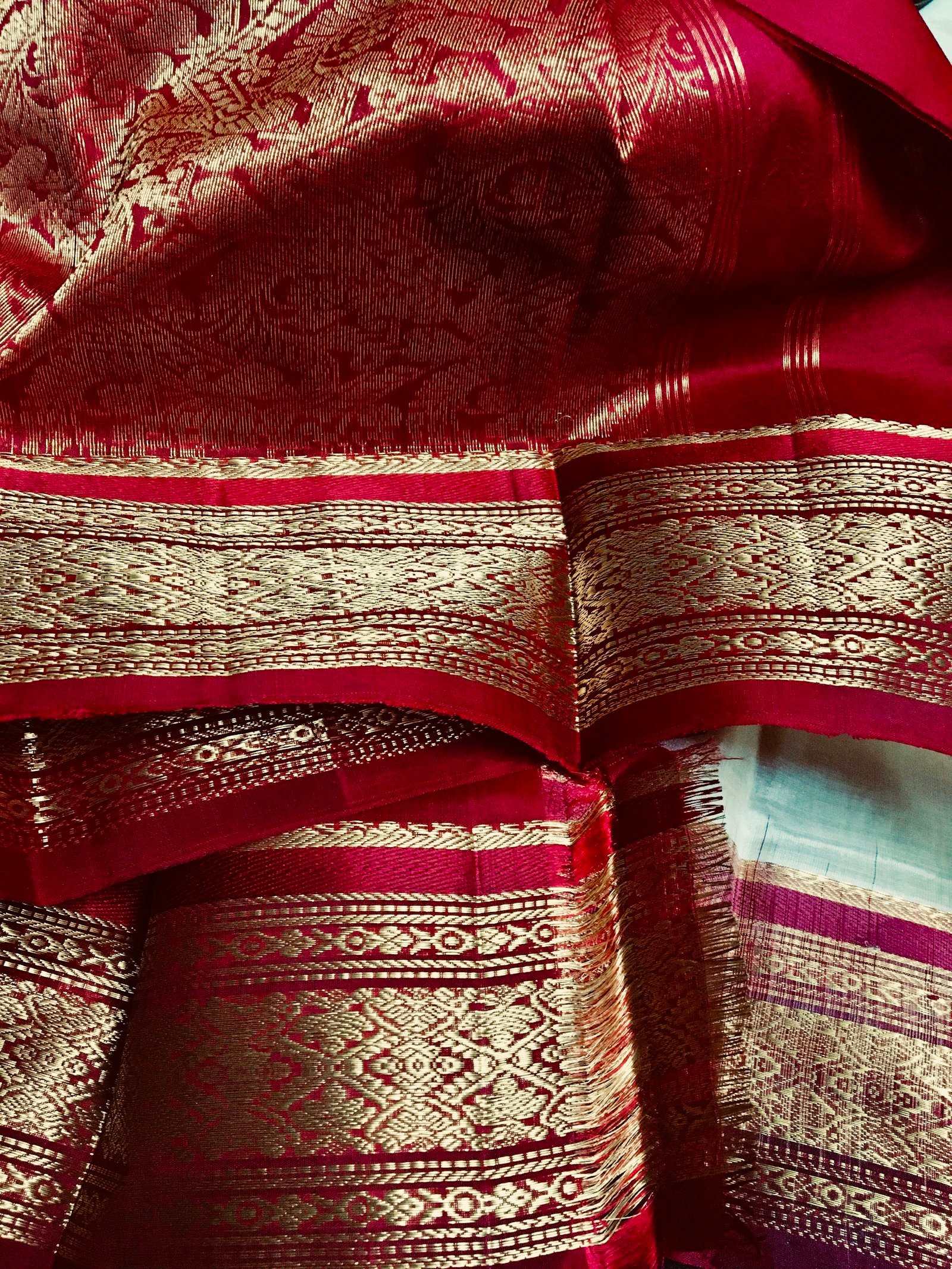
The biggest piece of the material value is zari. Older sarees, particularly Kanchipuram and Banarasi pieces, were often woven with zari made from silver thread coated in gold. The history of zari shows how long this tradition has been part of Indian weaving. A torn or stained saree still carries all of that zari in its border, pallu and buttas. That is the main reason specialist buyers are happy to evaluate pieces that look past their best.
Types of Damage Buyers Will Consider
When people come to Shri Ashtalakshmi to sell damaged silk sarees, they usually bring one or more of the following:
- Tears and holes: From moths, sharp edges or simply age along fold lines.
- Stains: Oil, turmeric, food, sweat marks or water spots.
- Colour bleeding: Where dye has run into the border or neighbouring colours.
- Mould or fungus spots: Common in sarees stored in damp conditions or plastic covers.
- Faded silk: Colours that have dulled from sunlight or repeated washing.
- Blackened zari: Silver in real zari naturally tarnishes and turns dark over time.
- Brittle fabric: Silk that cracks or splits when unfolded.
Every one of these can still be evaluated. In fact, blackened zari is often a good sign, because imitation zari does not tarnish the way real silver does.
What Decides the Price of a Damaged Saree
When you sell damaged silk sarees, the valuation focuses on what can still be recovered or reused. Our team looks at:
- How much zari the saree contains and whether it appears to be pure, tested or imitation
- The type and weight of the silk
- How extensive the damage is and where it is located
- The original craftsmanship of the border and pallu
A saree with a small tear in the body but a heavy, intact zari border can still receive a very reasonable offer. For a fuller picture, see our guide on the factors that decide old silk saree value.
When a Damaged Saree May Not Be Accepted
We believe in being honest, so it is worth saying that not every saree qualifies. If a saree is made of art silk or polyester and the zari is plastic based, there is very little material value to recover. Our post on real zari vs fake zari can help you understand this before you visit. Even then, we are happy to take a look and tell you clearly either way.
How to Prepare Damaged Sarees Before Selling
You do not need to repair anything. In fact, please do not try. Here is what helps:
Step 1: Do not wash, bleach or dry clean the saree before selling. Chemicals can harm zari.
Step 2: Air the saree in shade for a few hours to remove dampness and smell.
Step 3: Fold it loosely in a cotton cloth rather than plastic.
Step 4: Keep all pieces together if the saree has torn into parts, including loose borders.
Step 5: Take photos of the border and pallu if you want a quick opinion on WhatsApp first.
The Process to Sell Damaged Silk Sarees at Shri Ashtalakshmi
Our process for damaged pieces is the same as for well-kept sarees. You can see it in our how it works section:
Step 1: Share photos on WhatsApp or bring the sarees to our HSR Layout store.
Step 2: Our team examines each saree individually.
Step 3: We explain the condition, what still holds value and our offer.
Step 4: If you agree, you receive spot cash on the spot.
There is no charge for the evaluation and no obligation to sell.
Why Not Just Cut It Up or Throw It Away?
Upcycling an old saree into a cushion, a dupatta or a quilt is a lovely idea when the saree has sentimental value and you want to keep a piece of it. But throwing a zari saree away means throwing away real silver. And cutting it up without knowing its value can mean losing money you could have used. A free evaluation gives you the facts so you can decide what makes sense for your family.
Tips to Prevent Further Damage to Other Sarees
If you are keeping some sarees and selling others, these habits will protect the ones you keep:
- Store silk in soft cotton or muslin bags, never in plastic
- Refold sarees every few months so creases do not tear
- Keep neem leaves or cloves nearby instead of spraying chemicals
- Avoid direct sunlight in the cupboard
- Wrap zari borders in a layer of cotton to reduce tarnishing
Damaged Sarees We Commonly Buy
We evaluate damaged Kanchipuram silk, Banarasi silk, Mysore silk, tissue silk and zari sarees, along with brocade and antique pieces. If you have a full trunk to clear, our guide on how to sell old silk sarees in Bangalore covers the bigger picture.
Frequently Asked Questions
Can I sell damaged silk sarees that have split into pieces?
Yes. Bring every piece you have, including loose borders and the pallu if it has come apart. The zari in these sections still counts towards the evaluation, so nothing should be discarded before you visit.
Do burnt or iron-marked sarees qualify?
Small burns and iron marks are treated like any other damage. The team will check how much silk and zari remain intact and make an offer accordingly.
Will mould spots reduce the price a lot?
It depends on how far the mould has spread and whether it has weakened the silk. Light spots on the body usually matter less than damage to the zari border or pallu.
Is it better to repair a saree before selling it?
No. Repairs, patches and dry cleaning do not increase the value for a buyer who is assessing materials, and harsh cleaning can actually harm the zari. Bring the saree exactly as it is.
Do you buy sarees with very little zari?
We evaluate them, but plain silk sarees with minimal zari generally receive lower offers. We will always tell you honestly what a saree is worth before you decide.
Conclusion
A tear or a stain does not erase the silk and zari woven into a saree. If you have been wondering whether you can sell damaged silk sarees, the answer is yes, as long as you take them to a buyer who knows what to look for. Bring your torn, stained or faded sarees to Shri Ashtalakshmi at 27th Main Road, HSR Layout, Bangalore, call +91 81231 23383 or contact us here for a free, honest evaluation and spot cash.