It is one of the most common questions we hear: how much is my old silk saree actually worth? Families often have no idea whether a saree is worth a few hundred rupees or several thousand, and that uncertainty makes it hard to decide whether to keep it, gift it or sell it. Understanding your old silk saree value is easier once you know what buyers really look at.
There is no fixed price list for old sarees, because every piece is different. But the same seven factors come up every time a saree is evaluated. Here is what they are and why they matter.
Factor 1: The Type of Silk
The starting point is the silk itself. Pure mulberry silk is the most valued, followed by other natural silks such as tussar. Art silk, polyester blends and synthetic sarees that look like silk do not carry the same value.
The Silk Mark label, issued under the Central Silk Board, is one of the easiest ways to confirm a saree is pure silk. If your saree still has its tag, keep it with the saree. If it does not, a simple test can help, and we cover a few in our guide on identifying pure silk at home.
Factor 2: Zari Content and Quality
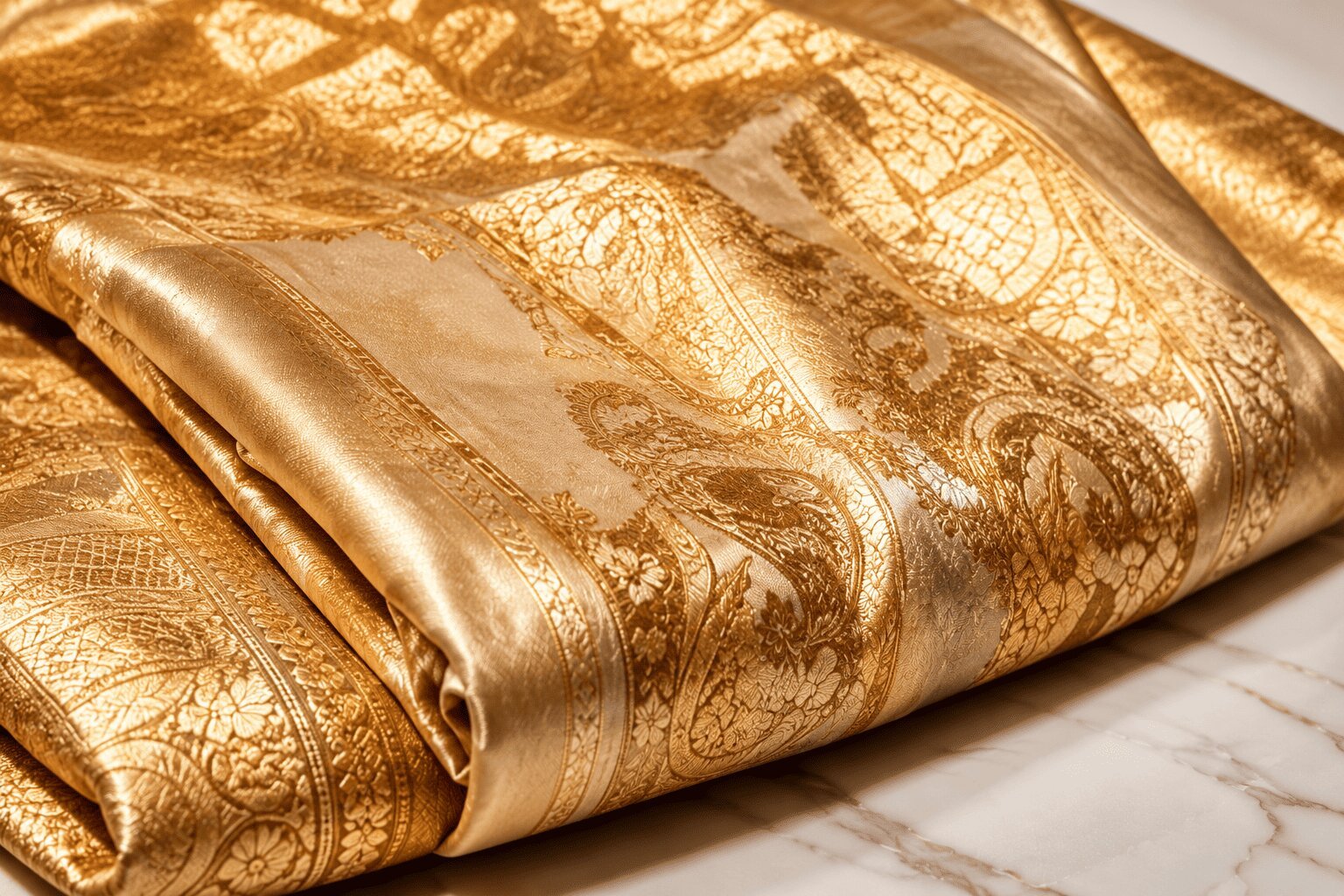
For most traditional sarees, zari is the single biggest contributor to old silk saree value. Zari is the metallic thread used in borders, pallus and buttas. Historically it was made by wrapping a silver thread with gold, and the Wikipedia page on zari gives a good overview of how it evolved.
Today you will find three broad types:
- Pure or real zari: Silver thread with a gold coating. Highest value.
- Tested zari: Copper thread with silver and gold electroplating. Moderate value.
- Imitation zari: Plastic or polyester based metallic yarn. Little to no metal value.
Our detailed post on real zari vs fake zari explains how to spot the difference.
Factor 3: Weight of the Saree
Heavier sarees often carry more zari and denser silk. A Kanchipuram with a broad border and a full brocade pallu will usually weigh much more than a light daily wear silk. Weight on its own does not decide the price, but it is a useful early indicator.
Factor 4: Craftsmanship and Weave
Handloom sarees with complex techniques are valued for the skill involved. Look for:
- Korvai or interlocked borders in Kanchipuram sarees
- Fine brocade and meenakari work in Banarasi sarees
- Even, tight weaving with neat thread work on the reverse side
- Detailed temple, peacock, mango or floral motifs
A well-woven saree tells you a skilled weaver spent weeks on it, and that shows up in the evaluation.
Factor 5: Origin and Style
Where the saree was woven matters. Kanchipuram silk sarees, Banarasi silk and Mysore silk each have a reputation and a typical set of materials. A genuine Kanchipuram from an established weaver will be judged differently from a powerloom copy that only looks similar.
Factor 6: Age and Design
Vintage sarees from a few decades ago are often more valuable than people expect, mostly because older weaving tended to use richer zari. Traditional designs that are no longer commonly woven also attract interest. That said, age alone does not add value if the saree is not pure silk or has imitation zari.
Factor 7: Condition
Condition affects how a saree can be used after it is sold, so it is part of the old silk saree value. Buyers note:
- Tears, holes and fraying
- Stains, mould spots and colour bleeding
- Faded or blackened zari
- Weak or brittle silk in places
Here is the part that surprises many people: a damaged saree is not automatically worthless. The zari inside a torn saree still has value. If your sarees are in rough shape, read our guide on selling torn or damaged silk sarees.
How to Get an Accurate Old Silk Saree Value
Online price guesses and neighbourhood estimates can be wildly off. The only reliable way is a hands-on evaluation by someone who handles silk every day. At Shri Ashtalakshmi, the process is clear and free:
Step 1: Send photos on WhatsApp or visit our store in HSR Layout.
Step 2: Our team checks silk quality, zari, craftsmanship and condition.
Step 3: We explain what we found and share a transparent valuation.
Step 4: If you are happy, you receive spot cash. If not, you take your saree home with no obligation.
Mistakes That Can Lower the Value
A few habits can quietly reduce what your saree is worth:
- Storing silk in plastic covers for years, which traps moisture
- Spraying perfume or naphthalene directly on the fabric
- Ironing directly over zari at high heat
- Washing heavy silk sarees at home in a machine
If you plan to sell soon, simply air the sarees and keep them folded in cotton cloth until your evaluation.
Should You Sell, Keep or Restore?
If a saree has strong sentimental value and someone in the family will wear it, keeping it makes sense. If it has been unused for years, is damaged beyond practical repair or you simply need the space and the money, selling to a specialist buyer is a sensible choice. Getting a valuation first lets you decide with real information instead of guesswork, and you can learn more about the options in our guide to selling old silk sarees in Bangalore.
Frequently Asked Questions
Is there a fixed rate per saree?
No. Because silk quality, zari content, weight and condition vary so much, every saree is priced individually. Two sarees bought in the same shop on the same day can receive very different offers decades later depending on how they were stored and what they are made of.
Does the original purchase price matter?
It gives some background, but it does not decide the current old silk saree value. What matters is what the saree contains today and the condition it is in.
Are wedding sarees worth more?
Wedding sarees are often heavier and carry more zari, so they frequently receive higher valuations. The occasion itself does not add value, but the materials used for such sarees usually do.
Can I get a rough idea from photos?
Yes. Clear photos of the border, pallu and body sent on WhatsApp help our team give an initial idea. The final valuation happens after a hands-on check, since zari and silk are best judged in person.
What if I disagree with the valuation?
You are free to take your saree back. There is never any obligation to sell, and you can ask our team to explain every part of how the offer was reached.
Conclusion
Your old silk saree value depends on a mix of silk purity, zari content, weight, weave, origin, age and condition. No two sarees are priced the same, which is why a careful evaluation matters. If you want to know what your sarees are worth, visit Shri Ashtalakshmi at HSR Layout, Bangalore, call +91 81231 23383 or reach us here. We will look at each saree, explain the valuation openly and pay spot cash if you decide to sell.