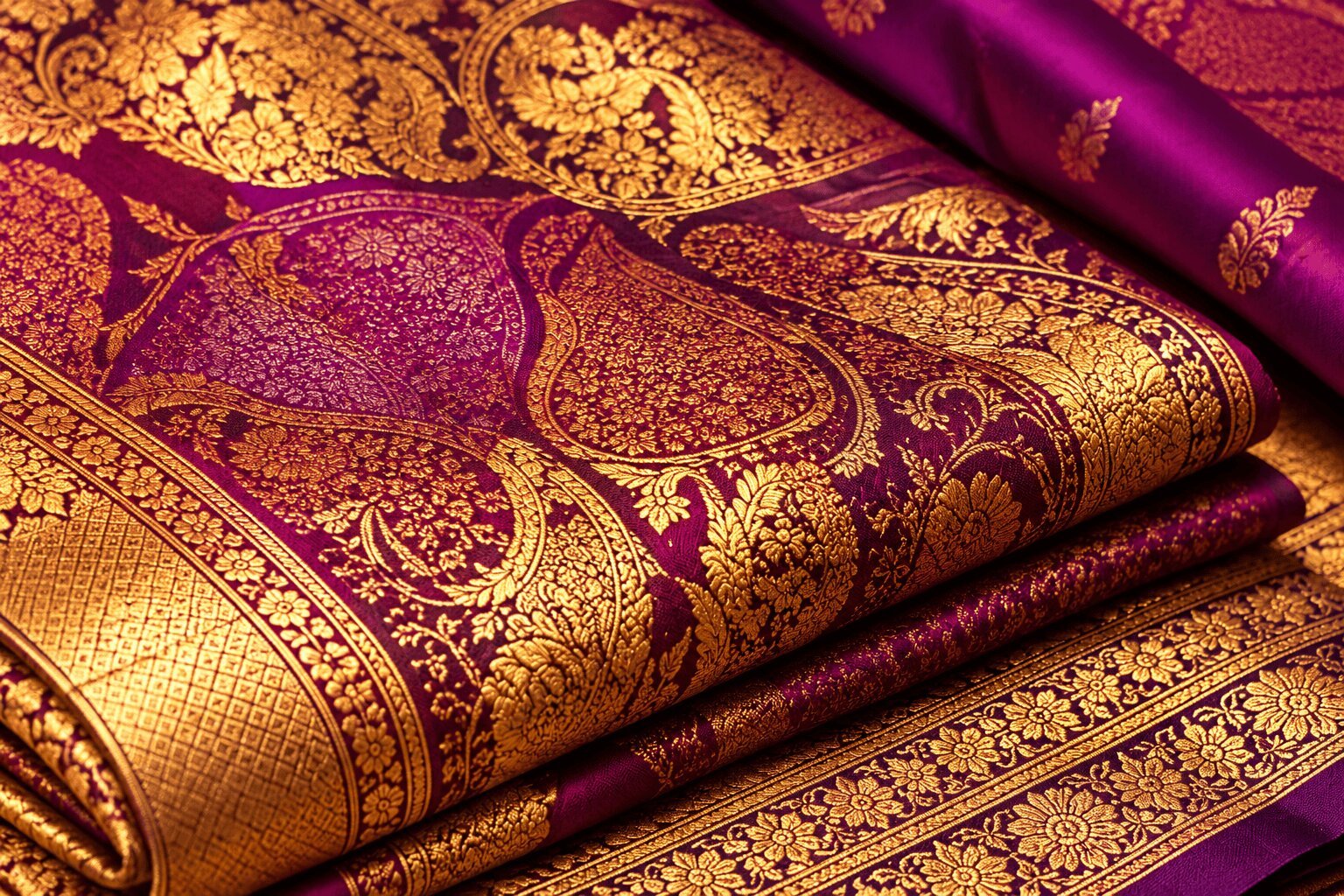
A Banarasi saree has a way of standing out in any wardrobe. The heavy brocade, the shimmering zari and the rich colours make it a favourite for weddings and big family occasions. But many of these sarees end up being worn once or twice and then stored for years. If you are thinking about whether to sell old Banarasi silk sarees, this guide will help you understand what they are worth and how to get a fair offer in Bangalore.
A Quick Look at Banarasi Sarees
Banarasi sarees are woven in Varanasi, one of the oldest weaving centres in India. They are famous for fine silk, intricate brocade and motifs inspired by Mughal art, such as florals, creepers, jaal patterns and paisleys. The Banarasi sari also has a Geographical Indication, which recognises its origin and craft.
Common styles you might find in your collection include:
- Katan silk: Pure silk with a plain, smooth weave, often with heavy zari borders.
- Kadwa or kadhua: Each motif is woven separately, giving a raised, rich effect.
- Jangla: Dense all-over floral patterns, often in zari.
- Tanchoi: Fine, intricate weaving with multiple coloured threads.
- Tissue Banarasi: Woven with zari in the weft for a metallic sheen.
Why Old Banarasi Sarees Are Worth Evaluating
Older Banarasi sarees often carry a large amount of zari, sometimes across the entire body rather than just the border and pallu. Vintage pieces woven a few decades ago are more likely to use pure or high quality zari, which contains silver. That is why people who sell old Banarasi silk sarees are often surprised by the valuation, especially for heavy wedding pieces.
The silk matters too. Pure katan silk Banarasis are valued much more than powerloom copies or art silk versions that only imitate the look.
What Buyers Check When You Sell Old Banarasi Silk Sarees
At Shri Ashtalakshmi, every Banarasi is evaluated individually. Our team looks at four things.
Silk Quality
Is it pure silk, and how has it aged? We check the feel, weight and lustre. If you are unsure, our guide on how to identify a pure silk saree has some easy home tests.
Zari Type and Coverage
We check whether the zari appears pure, tested or imitation, and how much of the saree it covers. A full brocade saree is assessed differently from one with a narrow border. Read our breakdown of real zari vs fake zari to understand this better.
Weaving Technique
Handloom kadwa work, fine tanchoi and detailed jangla patterns all reflect skill and are valued accordingly. Powerloom pieces with printed or flat designs score lower.
Condition
Tears, stains, faded colours and blackened zari are all noted. None of them automatically rules out a sale. If your saree has seen better days, our article on how to sell damaged silk sarees explains what to expect.
Real Banarasi or a Copy?
Because Banarasi sarees are so popular, there are many lookalikes. A few signs of a handloom Banarasi:
- Floating threads on the reverse side, especially behind motifs
- Small irregularities that show hand weaving
- A soft but dense feel rather than a stiff, plastic-like finish
- Heavier weight around the border and pallu
These are general clues, not proof. An experienced evaluator can tell with much more confidence.
How to Prepare Before You Sell
Step 1: Air the saree in shade for a few hours to remove moisture.
Step 2: Do not dry clean, wash or iron the zari before evaluation.
Step 3: Keep any bill, box or certificate with the saree.
Step 4: If you want a quick first opinion, photograph the border, pallu and reverse side and send them on WhatsApp.
The Process at Shri Ashtalakshmi
Families from across Bangalore visit our store at HSR Layout. Here is how it works:
Step 1: Share your saree details or visit us in person.
Step 2: Our team examines the silk, zari, weave and condition.
Step 3: We explain our findings clearly and make an offer.
Step 4: If you agree, you receive spot cash right away.
There is no evaluation fee and no pressure to sell.
Should You Sell or Keep Your Banarasi?
If someone in the family plans to wear the saree, or it carries deep sentimental meaning, it may be worth keeping and storing properly in cotton. But if a Banarasi has not left the cupboard in years, or it is damaged, it makes sense to know its value. A free evaluation gives you the facts without any commitment. You can also learn the general factors in our guide on old silk saree value.
Other Sarees You Can Sell With Us
Besides Banarasi silk sarees, we evaluate Kanchipuram silk, Mysore silk, tissue silk, brocade and antique zari sarees. See the full list in our we buy section.
Caring for Your Banarasi Until You Sell
If you are not ready to sell right away, a little care keeps the saree in better shape. Store it folded in a soft cotton or muslin cloth, never in plastic. Refold it along different lines every few months so the zari does not crack at the creases. Keep it away from damp walls and direct sunlight, and place a few neem leaves or cloves nearby instead of naphthalene balls, which can react with zari over time. Avoid hanging heavy Banarasi sarees for long periods, since the weight of the zari can stretch the silk. These simple habits protect both the look and the value of the saree, whether you decide to wear it again, pass it on or sell old Banarasi silk sarees from your collection later on.
Frequently Asked Questions
Can I sell old Banarasi silk sarees that are faded?
Yes. Fading affects appearance but not the zari inside. Faded sarees are evaluated the same way as others.
Do you buy Banarasi dupattas or lehengas?
Our main focus is silk sarees. If you have other zari heavy Banarasi pieces, send photos on WhatsApp and our team will let you know.
Is a Banarasi with full zari body worth more than a bordered one?
Usually, yes, because it contains more zari. The final offer still depends on the zari type and condition.
Can I bring sarees from my mother or grandmother without any bills?
Of course. Most heirloom sarees have no bills. The evaluation is based on the saree itself.
What if my Banarasi has a stiff, crackling feel?
Old silk can become brittle after long storage, especially in dry or hot cupboards. Do not try to soften it with water or conditioner. Bring it as it is and our team will check how the silk and zari have held up.
How quickly will I be paid?
Once you accept the offer, payment is made on the spot. There is no waiting period and no follow up needed.
Conclusion
Banarasi sarees carry rich craft and, often, a surprising amount of zari. When you decide to sell old Banarasi silk sarees, choosing a buyer who evaluates each piece carefully makes all the difference. Visit Shri Ashtalakshmi at 27th Main Road, Sector 1, HSR Layout, Bangalore, call +91 81231 23383 or contact us here for a free evaluation and a clear spot cash offer. If you have a mix of sarees to clear, our guide on how to sell old silk sarees in Bangalore covers the full picture.